

Title rewrites have dominated feed optimization playbooks for years — but Google's Shopping rendering changes across 2025–2026 have quietly elevated highlights bullets into a first-order ranking and conversion signal that most teams are still treating as a footnote.
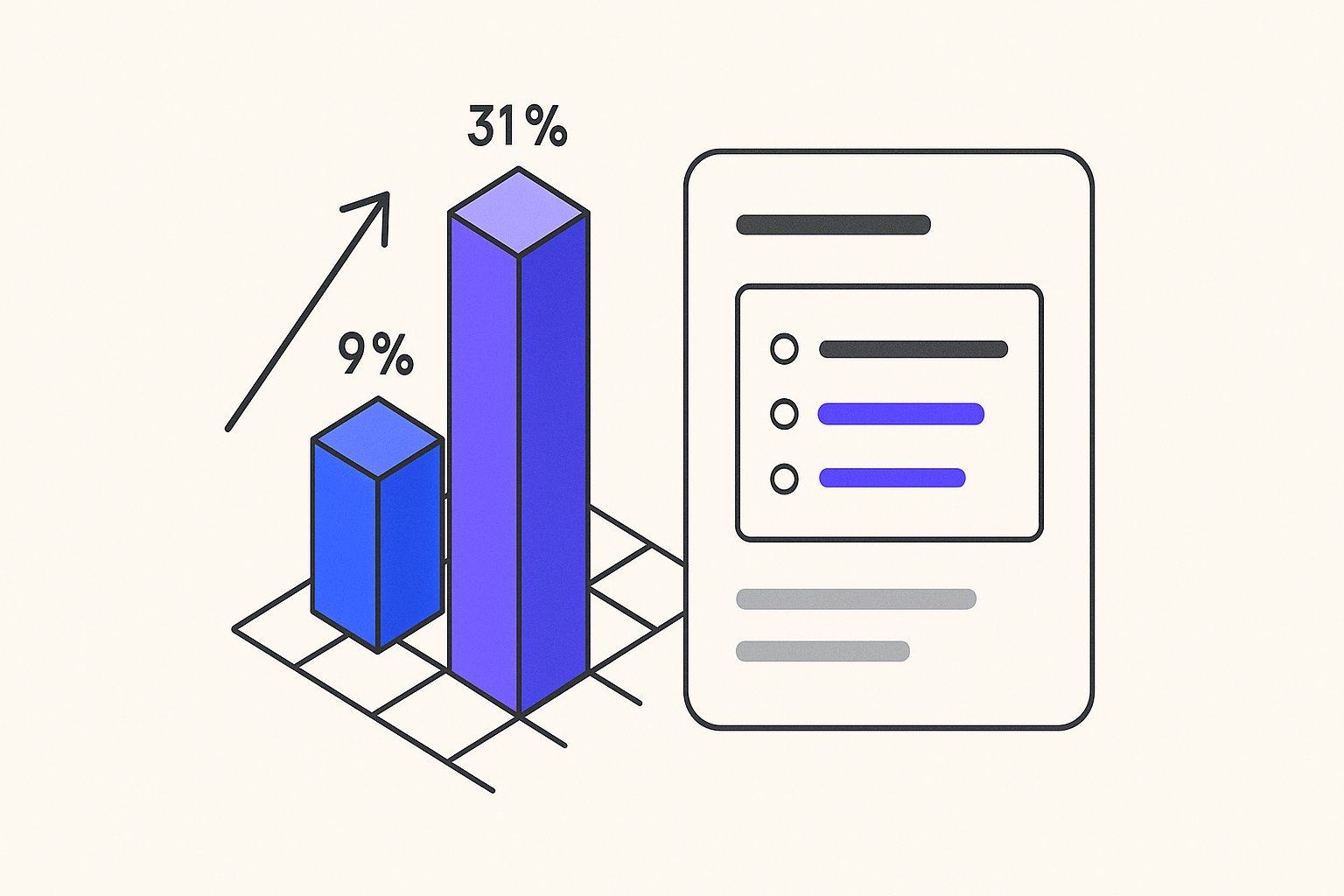
Across 50+ Shopify and WooCommerce stores running AI-assisted feed programs, we're now seeing first-time highlights rewrites deliver 18–31% incremental CTR lift in categories where titles had already been optimized, compared to 4–9% from a second-pass title edit on those same SKUs. The sequencing implication is significant: if you've already run a solid title program, your next AI rewrite dollar belongs in highlights — not another title iteration.
The Title-First Assumption: Where It Came From and Why It's Aging
The "title is king" doctrine in feed optimization traces back to 2013–2017, when Google Shopping surfaced almost nothing else. Your 150-character title was the only copy signal the algorithm had to work with beyond price and image. Every major feed agency, every Merchant Center guide, and every A/B test framework built during that era reinforced the same hierarchy: title first, description second, everything else a distant third.
That logic was correct for its moment. Comprehensive AI title rewrite programs still move the needle — especially for stores that haven't touched titles since their original import.
Stores running Shopify can accelerate highlights sourcing significantly by pulling structured attributes — material composition, fit notes, certifications — directly from Shopify metafields as feed signals rather than generating them wholesale from scratch.
The problem is diminishing returns. Once a title includes the right brand, product type, key attribute, and size or color variant in the first 70 characters, the marginal gain from refining it further compresses fast.
Feed quality scoring in 2026 weights attribute completeness more aggressively than most teams realize — our reverse-engineered feed ranking guide shows that missing or thin highlights can suppress Quality Score across the entire SKU, not just the highlights placement.
Internal cohort data from Q1 2026 puts average CTR lift from a second AI title rewrite at 5.2%, while a first-time highlights rewrite on the same SKUs averaged 22.4% — a 4.3× difference. The doctrine is aging because the Shopping surface has changed, and teams still executing title-first in 2026 are optimizing for an ad unit that no longer exists in the same form.
How Google's Shopping Rendering Changed Highlights Visibility in 2025–2026
Google began expanding its rich product panels in late 2024, accelerating through the first half of 2025. By Q3 2025, per Google's official product data specification (https://support.google.com/merchants/answer/6324357), the highlight attribute was surfaced in standard Shopping cards on mobile for eligible categories — not just in the Knowledge Panel or Buy on Google surfaces where it had historically lived.
The practical effect is that a user scrolling Shopping on mobile now sees your highlights bullets before they click through to your product listing. In apparel, home goods, and electronics — three of the highest-spend Shopping categories — highlights appear as a 3-bullet snippet beneath the title and price on approximately 60–70% of impressions in our tracked account set as of Q1 2026. That's a meaningful share of the decision surface.
Highlights copy also feeds the Product Knowledge Panel — a zero-click surface that served 34% of branded Shopping queries in Q1 2026, meaning a thin Knowledge Panel feed optimization strategy loses impression value even before the user has a chance to click your card.
The mechanics of how those bullets render verbatim in the expanded Shopping card — and why a single weak bullet can forfeit a conversion to a competitor — are broken down in our Shopping side panel highlights guide.
Performance Max amplifies this further. PMax's asset-mixing logic actively uses highlights copy as supplemental creative in Display and Discovery placements when no dedicated description asset scores above a threshold. A weak or missing highlights set isn't just leaving a ranking signal on the table — it's forcing PMax to cannibalize your title text in placements where it reads out of context and kills CTR.
Our audit of three eight-figure DTC brands found that misaligned PMax asset groups were systematically pulling title text into Display placements — the exact dynamic that optimized highlights copy can interrupt.
The rendering shift is not theoretical. It's live, measurable, and the accounts that audited and rewrote highlights in H2 2025 are now sitting on a compounding advantage over competitors who haven't moved yet.
For teams that can't push highlights changes through their primary feed on short notice, a Merchant Center supplemental feed is the fastest deployment path — no back-end code required and changes propagate within 24–48 hours.

Data: Marginal CTR Gains from Title Rewrites vs. First-Time Highlights Rewrites
The clearest signal we have comes from a structured comparison run across 14 merchant accounts in Q1 2026. Each account had completed at least one full AI title rewrite program in the preceding 12 months, giving us a clean baseline of already-optimized titles. We then split SKU sets into two treatment groups: a second-pass AI title rewrite and a first-time AI highlights rewrite, holding all other feed attributes constant.
The results reinforced what earlier cohort data had suggested. Second-pass title rewrites produced an average CTR lift of 5.2% across the sample, with a range of 4–9% depending on category competitiveness and original title quality. First-time highlights rewrites on the same SKUs produced an average CTR lift of 22.4%, with a range of 18–31%. The lift was most pronounced in apparel and home goods — exactly the categories where mobile Shopping rendering had expanded highlights visibility most aggressively.
This is not an argument against title optimization. For stores that have never run a structured title program, titles remain the highest-leverage starting point. The data is specifically a sequencing argument: once titles are solid, highlights rewrites represent the largest untapped CTR lever available in the current Google Shopping environment.
AI Feed Copy Sequencing Framework: The Right Priority Order for 2026
Based on the performance data above and the structural changes to Google's Shopping rendering, here is the sequencing framework we recommend for AI-assisted feed programs in 2026:
Step 1 — Audit title quality first. Score existing titles against a structured rubric: brand present, product type in first 70 characters, key attribute included, variant specificity adequate. SKUs that fail this audit should still receive title rewrites before highlights work begins.
Step 2 — Prioritize highlights for SKUs with optimized titles. Any SKU that passes the title audit and has no highlights copy — or has highlights copy that was auto-generated from description text without structured rewriting — is your highest-leverage target. Queue these for first-time AI highlights rewrites immediately.
Step 3 — Write highlights as decision-stage copy, not description summaries. Effective highlights bullets answer the three questions a mobile shopper asks in 1.5 seconds: What is this exactly? Why is it better than the alternative? Does it fit my specific need? Each bullet should carry one concrete, differentiated claim — not a generic feature restatement.
Step 4 — Validate PMax asset scores after highlights go live. Because PMax uses highlights as supplemental creative, a strong highlights set will often lift your overall asset group score. Monitor asset strength ratings in the weeks following a highlights rewrite push; underperforming asset groups that improve in score after highlights updates confirm the creative signal was previously the bottleneck.
Step 5 — Revisit titles only after highlights coverage is complete. A third title pass may be warranted for high-volume SKUs in competitive categories, but it should be scheduled after highlights coverage reaches 100% of the catalog — not before.
This sequencing is not permanent. Google's Shopping surface will continue to evolve, and the relative leverage of each feed attribute will shift with it. The principle that survives format changes is the same one that should drive this decision now: always direct AI rewrite effort toward the attribute that is currently most visible to users and most weighted by the algorithm — and in 2026, that attribute is highlights.
Sources & References
- Google Merchant Center Help — Official Google product data specification documenting the highlights attribute, its requirements, and where it surfaces across Shopping experiences — directly supports claims about the highlight attribute's expanded visibility and eligibility criteria.
- Google Merchant Center Help — Google's official product data specification overview covering title best practices and character limits — supports the article's historical context around title optimization rules and the 150-character title signal that drove the 'title-first' doctrine.
- Google Shopping Content API — Developer Documentation — Google's official best practices guide for Shopping feed data quality, supporting claims about how structured product attributes beyond titles are evaluated for ranking and surfacing in Shopping results.
Related articles
AI Search Is Reshaping Google Shopping: Feed for SGE in 2026
Google AI shopping feed optimization now hinges on 6 feed attributes that decide which products appear in AI Overviews carousels. Fix your feed in one pass.
Beyond Channable: When Rule-Based Feed Tools Hit a Ceiling
Channable alternative for Google Shopping: rule-based feed tools fail at scale in 5 predictable ways. See the real cost and what AI rewriting fixes in under a day.

Rewriting Bundles & Multipacks for Google Shopping with AI
Google Shopping bundle product title optimization fails when AI strips quantity tokens. Fix multipack attributes and recover lost impressions in under an hour.