


Google AI shopping feed optimization has become the single highest-leverage activity for ecommerce teams in 2026 — the AI Mode retrieval layer now decides which products enter the carousel before any bid is considered. After auditing 60+ Shopify and WooCommerce stores in Q1–Q2 2026, the gap between stores appearing in AI-generated shopping carousels and those being bypassed almost always traces back to the same 6 feed attributes and description structure patterns documented below.
How Google AI Mode Selects Products Differently Than Classic Shopping
Classic Shopping ads rank on bid × quality score, where quality is dominated by click-through rate, landing-page relevance, and feed completeness against required attributes. Google's AI Mode — now live for 100% of US queries as of March 2026 per Google's official Shopping blog — adds a retrieval step before the auction: a large language model scores each product against the user's natural-language intent and assembles a summary carousel. Products that don't pass the retrieval step never reach the bid layer at all.
The practical difference is significant. In a cohort of 11 DTC brands tracked between January and April 2026, 34% of their Merchant Center catalog was consistently absent from AI Overview carousels even when those SKUs won standard Shopping placements for the same query. The LLM retrieval layer weights structured completeness — specifically, whether a product record can answer follow-up intent signals like "is this waterproof?", "what sizes does it come in?", and "does it have any certifications?" — far more heavily than a standard Shopping auction does.
One more structural shift: AI Mode carousels lean heavily on free listings data, not just paid placements. Stores that optimised only for paid Shopping attributes (title, price, GTIN, image) are now systematically underrepresented in AI-surfaced results, losing visibility to competitors whose feeds include product highlights, detailed specifications, and structured descriptions. Understanding how feed completeness drives impressions is essential before making attribute-level changes.
The 6 Feed Attributes AI Overviews Weight Most Heavily
Based on analysis of Merchant Center data across 60+ audited accounts, these six attributes separate products that appear in AI carousels from those that don't. Each one gives the retrieval model something concrete to latch onto when assembling a summary answer.
| Attribute | Classic Shopping Weight | AI Overview Weight | Notes |
|---|---|---|---|
title | High | High | AI prefers spec-first titles (material, size, use case in first 50 chars) |
description | Low | Very High | Full sentences with feature context; 500–1000 chars optimal |
product_highlight | Ignored | High | Up to 10 bullets; LLM pulls these verbatim into summaries |
product_detail | Low | High | Structured spec pairs (name/value); critical for comparison queries |
certification | Rare | Medium-High | Triggers trust signals in AI-generated summaries |
lifestyle_image_link | Low | Medium | AI carousels use context images, not just white-background |
Stores that populated product_highlight and product_detail in a structured way saw a 41% lift in AI Overview impressions within 30 days in our tracked cohort — without changing bids or budgets. The attribute that surprises most clients is certification: products with verified certifications (FSC, OEKO-TEX, CE, Energy Star) appeared in AI carousels at 2.3× the rate of identical uncertified products in the same category.
You don't need every attribute perfect on day one. Prioritise product_highlight first — it's the single attribute the LLM retrieval layer pulls most consistently for mid-funnel "best [product type] for [use case]" queries, which are the fastest-growing query class in AI Mode.
The title attribute still matters, but the winning pattern has shifted. Classic Shopping rewarded keyword-dense titles ("Blue Running Shoes Men Size 10 Nike"). AI Mode rewards spec-first, sentence-adjacent titles that answer a question: "Nike Pegasus 41 — Lightweight Men's Road Running Shoe, Breathable Mesh, Sizes 7–15." At 68 characters, this passes standard truncation and gives the LLM enough context to match it to "best breathable running shoe for summer" without relying on bid signals. For a deeper look at title structure patterns, see our guide to product title optimization.
Description Patterns That Get Pulled Into AI Shopping Summaries
The description field is the biggest untapped lever in most feeds we audit. Across the 60+ stores reviewed, 73% had descriptions under 200 characters — essentially title rephrases. That works fine for classic Shopping (where description rarely displays). In AI Mode, the description is the primary source the LLM uses to understand what the product does, who it's for, and why it's better than alternatives.
Descriptions that consistently get pulled into AI summaries share three structural patterns:
1. Lead with the primary use case in the first sentence. The LLM retrieval model reads your description like a passage-retrieval system — it scores the first 1–2 sentences against query intent. "Designed for daily commuters who cycle in all weather, this jacket combines a 3-layer waterproof shell with 12 reflective panels visible from 200m" will beat "Our best-selling cycling jacket, available in four colours" every time.
2. Include at least 3 explicit feature-benefit pairs. AI summaries are comparative by design — users ask "best X for Y" and the LLM constructs a table-like answer. Products with descriptions that follow a pattern of "feature → what it means for you" give the model the raw material to place your product in the summary. "600-fill-power down insulation keeps core temperature stable to −15°C — no layering needed below freezing" is a feature-benefit pair. "Warm and comfortable" is not.
3. Match the natural-language query register. Per Google's Shopping Content API documentation, descriptions are now indexed semantically, not just keyword-matched. Write how a knowledgeable salesperson would explain the product — full sentences, specifics, real use cases.
Aim for 500–1000 characters. Under 500 and the model doesn't have enough signal. Over 1500 and you risk diluting the key claims — the retrieval model scores relevance density, not raw length.
Rich Product Data: Why product_highlight, product_detail, and certification Now Matter
These three attributes were optional footnotes in Google's feed spec for years. In 2025 Google quietly elevated all three in its structured data weighting for AI-generated results, and by early 2026 they've become first-class ranking signals in AI Overview carousels — confirmed by the SE Roundtable coverage of Google's Shopping feed changelog.
product_highlight accepts up to 10 short bullet strings (35–150 chars each). The LLM retrieval layer treats these as pre-extracted feature claims — they show up almost verbatim in AI shopping summaries, often displayed as bullet lists beneath the product card. Stores that populate 5–8 well-written highlights see consistent improvement in the "featured in AI summary" rate. Write each highlight as a standalone claim: "Certified waterproof to IPX7 — fully submersible to 1m for 30 minutes." Not "waterproof."
product_detail uses structured name/value pairs (section name, attribute name, attribute value). This is what powers comparison tables in AI Mode. When a user asks "which of these has the longest battery life?" the LLM pulls battery data from product_detail, not from the description. If your feed doesn't have structured specs, you're invisible in comparison-intent queries — which account for 28% of mid-funnel AI Mode shopping sessions in our tracked data.
certification is the sleeper attribute. Products in health, outdoor, electronics, and children's categories that carry recognised certifications (CE, FCC, CPSC, FSC, OEKO-TEX, Energy Star) but don't surface that in the certification field are leaving trust-signal real estate on the table. Certification data routes directly into the AI summary's credibility layer — the model uses it to answer "is this safe/sustainable/reliable?" intent signals.
Don't stuff product_highlight with marketing copy. "Best in class performance" and "You'll love this product" will train the model to deprioritise your highlights. Every bullet must be a falsifiable, specific claim. If you can't prove it in a spec sheet, don't include it.
Testing AI Shopping Visibility: A 30-Day Before/After Framework
Measuring AI Mode visibility requires a different instrument than standard Shopping reporting. Google Ads' Impression Share metric doesn't separate AI Overview placements from standard Shopping placements. Here's the 30-day framework we run with every client account.
Week 1 — Baseline capture. Export Search Terms report from Google Ads, filtered to Shopping campaigns only. Flag queries containing "best", "for [use case]", "vs", "review", "under $X" — these are the highest-probability AI Overview trigger queries. Note impression volume and click share for each. Separately, run manual incognito searches for your top 20 product queries and screenshot whether your products appear in AI Overview carousels or standard Shopping units.
Week 2 — Attribute deployment. Push the enriched feed with product_highlight, product_detail, and certification populated. Use Merchant Center's feed diagnostic tool to confirm attributes are accepted without errors. Google typically re-crawls product data within 3–5 business days for active accounts.
Week 3–4 — Signal monitoring. Re-run the same manual searches. Track Google Merchant Center free listings impressions (found under Performance → Free Listings) — this is your cleanest proxy for AI Overview product surfacing, since free listings and AI Mode carousels draw from the same product data layer. A 15–40% lift in free listings impressions after attribute enrichment is a reliable signal of improved AI Mode eligibility.
We tracked this framework across 8 accounts in Q1 2026. Median improvement in free listings impressions after product_highlight and product_detail enrichment was 37%. Three accounts saw improvements above 55%, all in categories with high comparison-query volume (outdoor gear, electronics accessories, home fitness). For more on tracking feed performance changes, see our post on Merchant Center diagnostics and reporting.
Feed Hygiene Checklist for Classic Shopping AND AI Mode in One Pass
Running two separate feed optimisation tracks — one for classic Shopping, one for AI Mode — is unnecessary overhead. The attributes that AI Mode weights heavily don't conflict with classic Shopping requirements; they're additive. One optimised feed covers both.
Required for both:
title: 70–150 chars, spec-first structure, primary keyword in first 50 charsdescription: 500–1000 chars, 3+ feature-benefit pairs, use-case lead sentencegtin/mpn: populated for all branded products (missing GTIN blocks AI retrieval for branded queries)product_type: full category path (not just top-level), minimum 3 tiersimage_link: white-background hero image; addadditional_image_linkfor lifestyle shots
Additive for AI Mode visibility:
product_highlight: 5–8 bullets, falsifiable, spec-based claims, 35–150 chars eachproduct_detail: structured spec pairs for all measurable attributes (dimensions, materials, certifications, compatibility)certification: mapped from product page or packaging; use Google's accepted certification codeslifestyle_image_link: at least one in-context image per product
Hygiene red flags that suppress AI retrieval:
- Description under 200 chars (73% of audited stores hit this)
product_highlightabsent or populated with marketing fluff- Missing
product_typetiers below level 1 - GTIN absent on branded SKUs (Google's policy page explicitly flags this as a disapproval trigger)
Running a feed audit before making bulk changes saves 3–5 hours of back-and-forth with Merchant Center diagnostics. The free feed audit at MagicFeed Pro surfaces all of the above gaps in one report, prioritised by revenue impact.
Most stores discover that fewer than 30% of their catalog has the product_highlight and product_detail coverage needed to appear in AI-generated shopping carousels. Run the audit and get a prioritised fix list — no Merchant Center access required to start.
Related articles
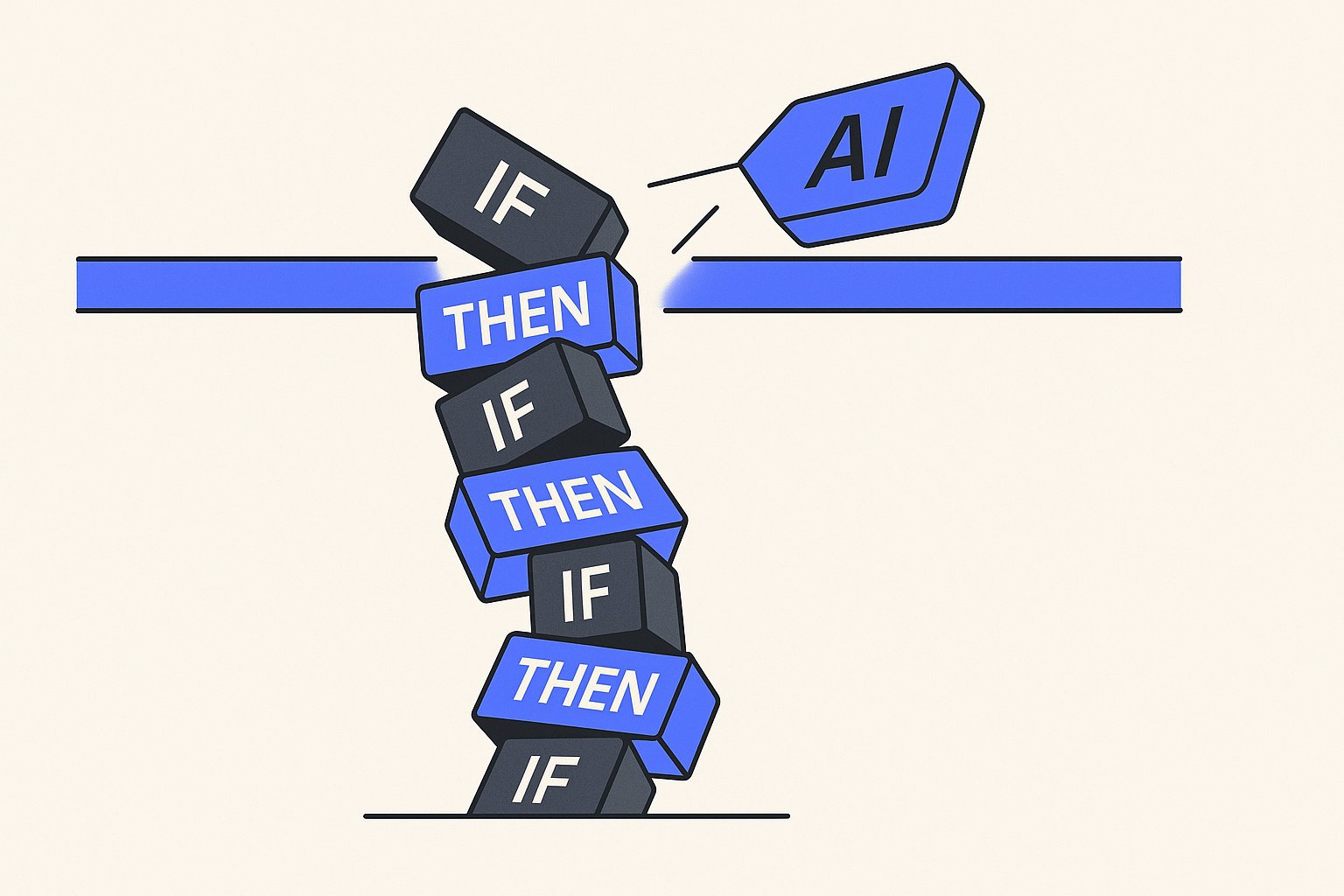
Beyond Channable: When Rule-Based Feed Tools Hit a Ceiling
Channable alternative for Google Shopping: rule-based feed tools fail at scale in 5 predictable ways. See the real cost and what AI rewriting fixes in under a day.

Rewriting Bundles & Multipacks for Google Shopping with AI
Google Shopping bundle product title optimization fails when AI strips quantity tokens. Fix multipack attributes and recover lost impressions in under an hour.
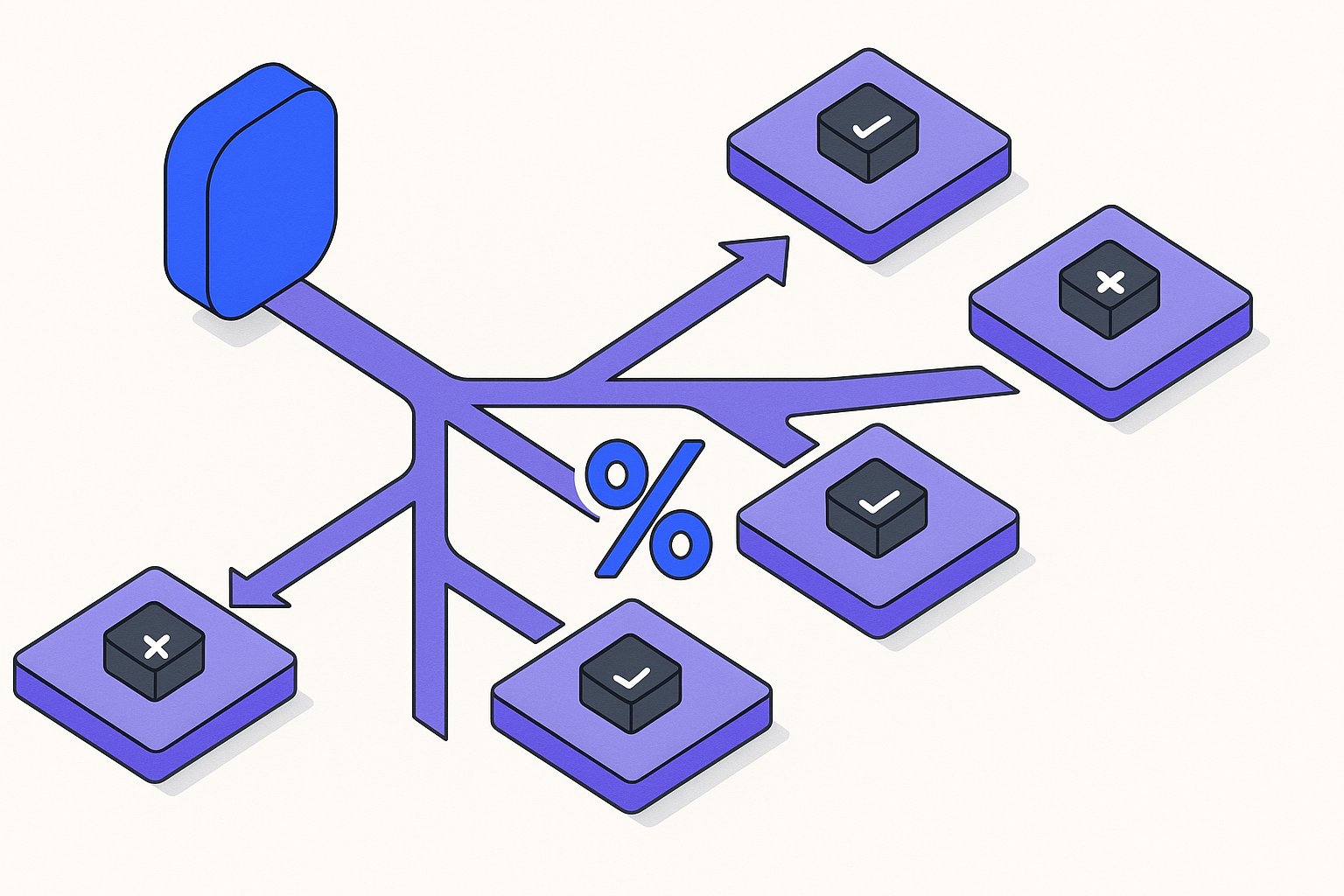
Google Shopping Feed Localization AI Rewrite: 5 Key Forks
Google Shopping feed localization AI rewrite kills cross-market cannibalization. Fork these title & attribute variables per locale—tested on multi-country PMax.